
Head spinning?
February 2022

When it comes to the honey crop beginners frequently get all tangled up in the technology on offer, extractor types, frame size and spacing, and so on.
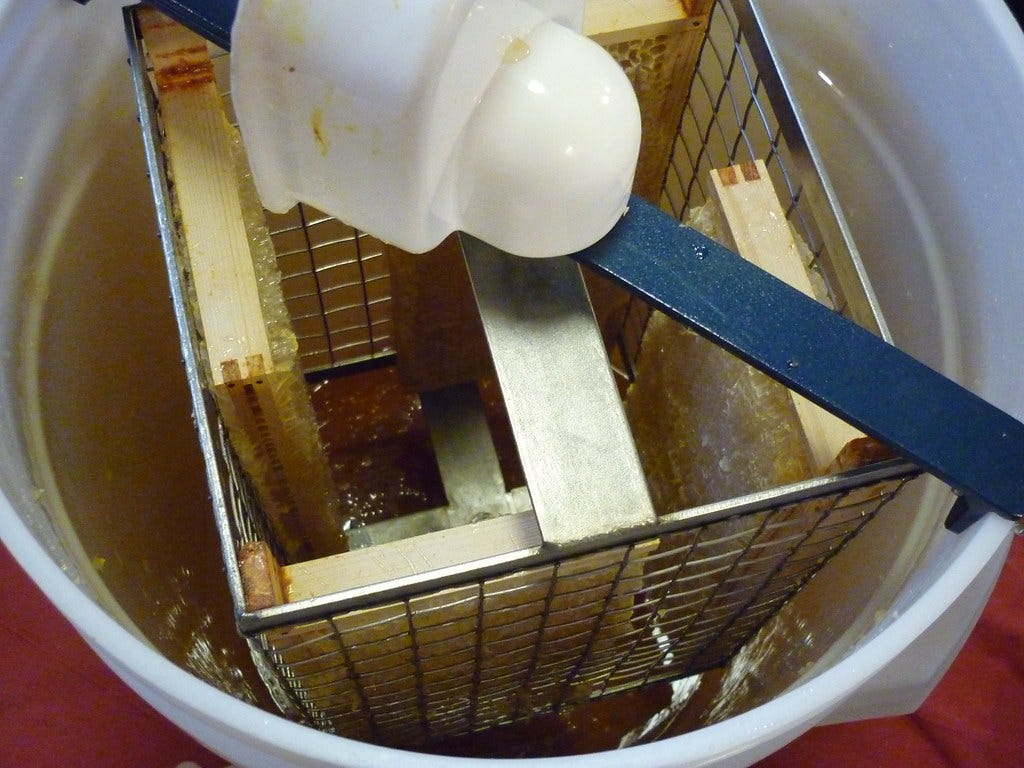
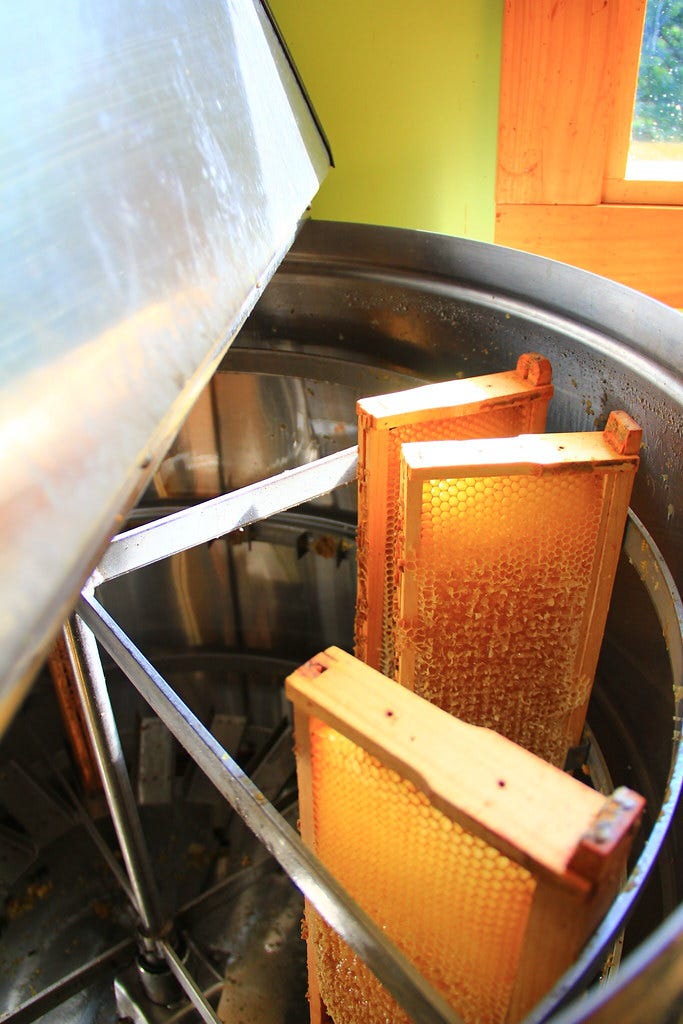
Unless you want another mortgage extractors themselves come in two basic types, radial and tangential. In radial extractors the frames are placed like spokes in a wheel. Small radials are vertical, big ones may be horizontal. Tangential extractors usually take two or four opposing frames in a line at right angles to a radius. The reason for this is just capacity; you can get more frames turning a higher speed in radial extractors, and, as a bonus, you don’t have to turn them over. Tangential extractors are gentler with the frame fully supported but extract one side of the frame at a time.
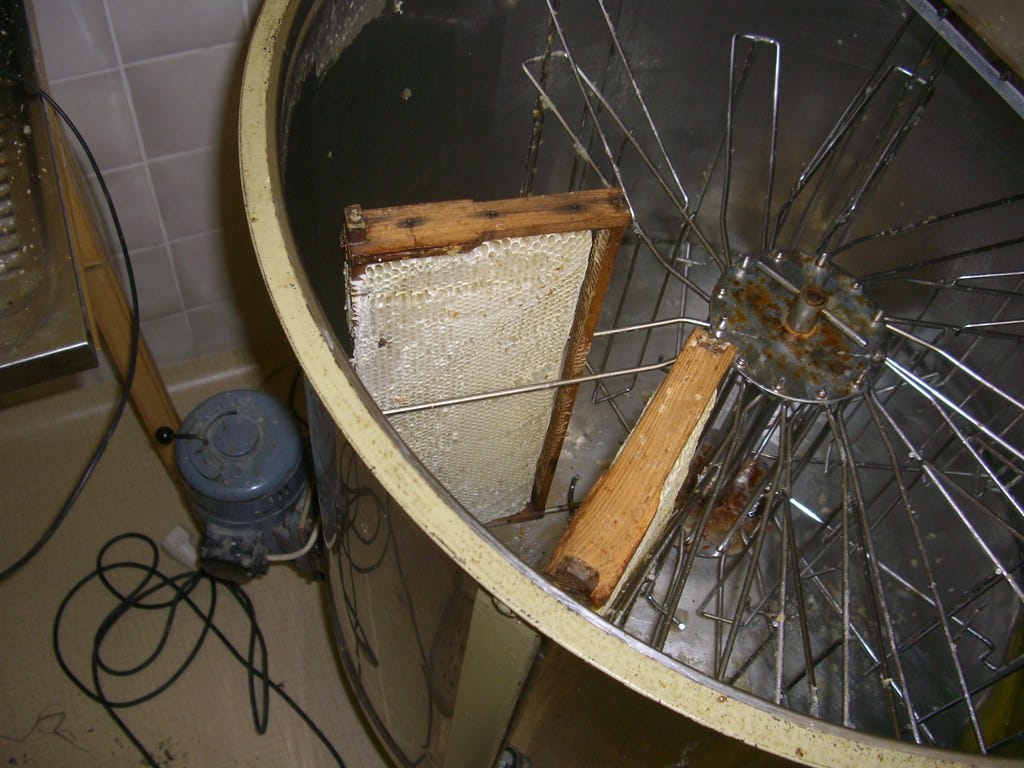
The type of extractor you use has consequences. Tangential extractors are generally flexible with frame size, and don’t need wired frames. They are smaller and turn lighter loads so as long as they are correctly balanced they can be portable or simply mounted. They are cheap. Radial extractors must have wired or plastic frames that can withstand the higher forces incurred and are usually built with specific frames in mind. Big radials need proper, permanent mounts. They are expensive.
The choice of frame rests on a few of decisions. Do you want to standardise so that brood frames and honey frames are interchangeable? For example, it’s common (and easier) get frames drawn in the supers during a honey flow, then extract them and use the ‘new’ drawn frames to supply brood boxes. Getting new frames drawn in a brood box is not always straightforward.
Secondly, does the kind of honey flow you have support the use of big frames? Short, sharp flows can sometimes be managed better with small frames that are more likely to be sealed and contain one nectar type. Small frames can get by with less, or no, wiring and can permit a little cut-comb. If you find your honey frames are often half capped and extracting the open cells increases the moisture content of your harvested honey consider a smaller super frame.
Leaving the obvious ‘till last, how much weight can you pick up? Even small individual honey boxes can approach 20kg lift limit. A full-depth Langstroth super can be over 30kgs. If you think about Health & Safety advice you ought to be getting help. You will be lifting many these at shoulder height (we hope), probably by yourself! Now, in some systems, frames are removed and cycled, so a whole box is never removed, that’s often done in bee-houses were the colony is much more intensively managed. Never-the-less, a few big frames at three of four kilos each soon mounts up.
The frame spacing you choose (and so the number of frames that fit in a box) will have some bearing on the weight you handle, but it’s really about frame uncapping. If you uncap by hand, or with a pricker, you can uncap cells where-ever they are. By increasing the space between the frames its possible to lengthen the cell and the position of the capping so that any parallel blade cutting the cap off doesn’t get fouled by the frame parts. All the capping will sit above the widest part of the frame itself. If the cappings are too high you will increase the amount of honey mixed with your cappings and must have a second process to recover it and return it to your yield. If too much of the comb is shallow, you will have to intervene with manual uncapping.
Another reason to pay attention to spacing arises when you work for cut- comb honey. Packaging requires even weights, and therefore identical ‘cubes’ of comb need to be cut. It’s important that all three dimensions are managed consistently, and one of these is controlled by the space between the frames.
When you are doing the job yourself, all these issues can seem a bit trivial but when you contract the work to someone else not getting the frame spacing right becomes inefficient and expensive. They won’t be overjoyed either if they have to stop and take your frame parts out of their machinery. The more processes you (or someone else) have to recover honey from cappings or scrape it from the deep recesses of the comb the further you stray from the pure untarnished product you’re after, more filtering, more heating, more settling: more process, more money, and less honey.